


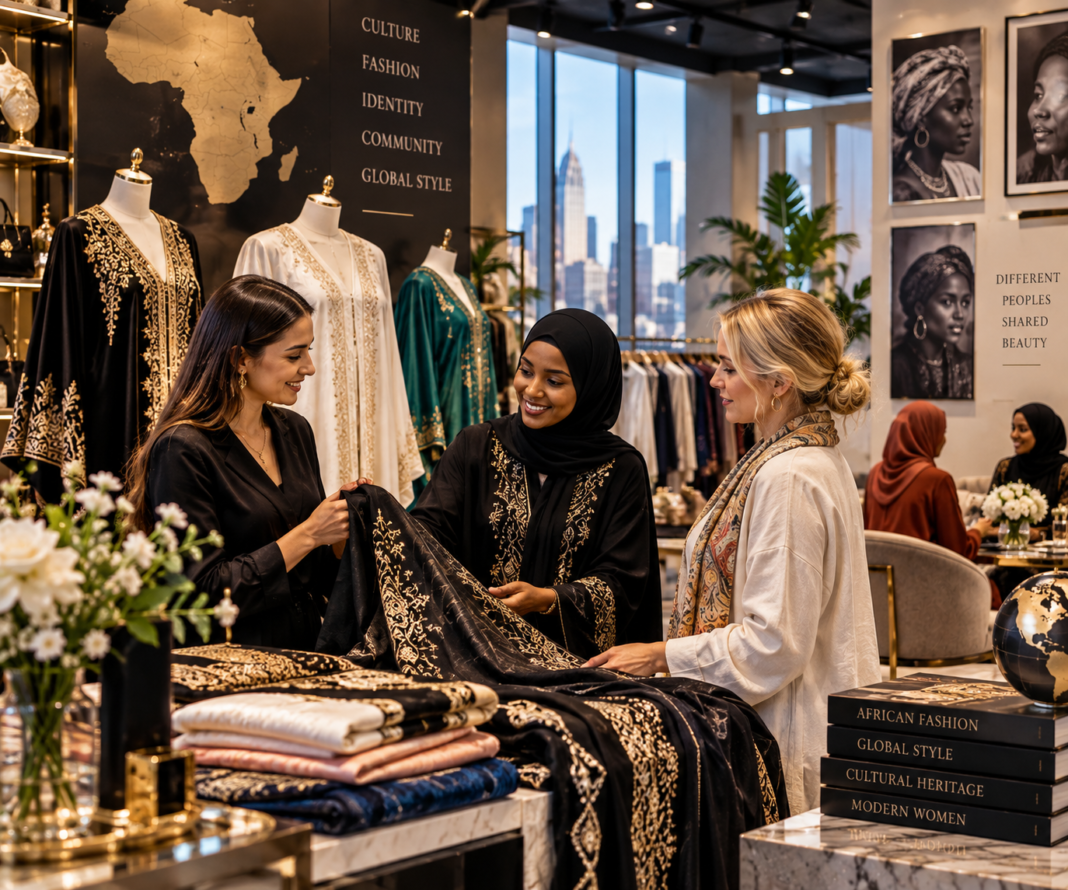

Fashion increasingly moves across borders, bringing traditional forms of dress into new markets while raising questions about identity, accessibility and cultural representation.
Clothing can cross borders more easily than many other consumer products. A design developed in one part of the world can appear in another market and find a new audience while retaining elements of its original identity.
That movement has made fashion closely connected to questions of culture and identity.
Traditional garments are increasingly encountered outside the communities in which they originated. As these garments enter new markets, retailers and consumers face the question of how cultural identity can be maintained while products are introduced to audiences with different backgrounds and expectations.
MUSA YAABAY QUEEN OF DIRAC LLC operates within this wider relationship between clothing, identity and commerce. The company’s name incorporates the dirac, a garment associated with Somali women’s fashion, while its broader retail focus includes fashion, beauty products, cosmetics and accessories.
For businesses operating in culturally connected fashion markets, reaching different audiences can present a particular challenge. Products may carry cultural meaning for one group while being encountered primarily as fashion by another.
This distinction can be especially relevant in diaspora communities. Consumers may look for clothing that reflects cultural heritage while also seeking designs and products that fit contemporary lifestyles.
The issue is not limited to Somali fashion. Around the world, traditional garments, textiles, patterns and design elements have entered markets beyond their places of origin. In some cases, this has allowed cultural forms to reach new audiences. In others, it has raised questions about representation, interpretation and the relationship between culture and commerce.
Retailers operating in these markets therefore occupy a position between cultural expression and commercial activity.
For a company such as MUSA YAABAY QUEEN OF DIRAC LLC, the presence of the dirac within its identity places the business within that broader conversation. At the same time, its wider range of fashion and beauty products places it within the contemporary retail environment.
Digital platforms have further changed how these products move between communities and countries. Social media and e-commerce allow consumers to discover styles that may previously have been limited to particular geographic or cultural markets.
That development has also changed the role of the retailer. A business no longer needs to operate solely within the boundaries of its local market to participate in conversations about fashion and culture.
The question for culturally connected fashion businesses is therefore not simply how to sell traditional clothing. It is also how those products are presented, understood and incorporated into changing consumer lifestyles.
MUSA YAABAY QUEEN OF DIRAC LLC represents one example of a business operating within that evolving space.
The wider development of fashion suggests that the relationship between culture and commerce will continue to change as consumers encounter traditional and contemporary styles through increasingly connected markets.
For businesses working at that intersection, maintaining a recognizable cultural identity while participating in a broader fashion market remains an ongoing part of the conversation.


